


Post Apo Tycoon - Idle Builder
4.53.86K Reviews
App Specs
- Version
- 1.0.54
- Updated On
- License
- Free
- Downloads
- 1,000,000+
- Developer
- POWERPLAY MANAGER, s.r.o.
- Categories
- Strategy
- Platform
- Android, iOS
Screenshots

 Analysis by AppCompare
I tend to enjoy strategy games more when their decisions have a visible purpose, and a ruined settlement gives every choice a natural context: people need supplies, buildings need investment, and a fragile community has to become more self-sufficient. That is the basic appeal of Post Apo Tycoon - Idle Builder. It is a free strategy game from POWERPLAY MANAGER, s.r.o., built around restoring life after a catastrophe rather than chasing action for its own sake.
The idle-builder format makes it easier to fit into small breaks than a game that expects constant attention. You can check how your settlement is doing, decide what deserves attention next, and leave the longer-term work to unfold. I would approach it as a gradual planning game, not as a quick sequence of victories. That difference matters: the pleasure is in watching a settlement take shape, while the main frustration is that progress can feel slow if you want immediate, dramatic change.
Who will feel at home in this ruined world
This is a good fit if you like balancing several needs and making incremental improvements without having to play every minute. The post-apocalyptic setting gives the settlement-building premise a more focused mood than a cheerful town simulator, while the idle structure suits someone who wants to dip in between other tasks. If you enjoy asking what to improve next and seeing the consequences accumulate, there is a satisfying routine here.
It is less suited to players who want a tightly scripted story, direct control over every moment, or a fast competitive match. Idle games deliberately leave stretches of time in which the player is not actively doing much. If that feels like waiting rather than planning, a hands-on real-time strategy game may be a better choice. Likewise, anyone looking for a pure survival challenge should be aware that the central appeal here is building and management, not simply enduring danger.
What the purchase details do—and do not—tell me
The game is free to download, but it offers optional in-app purchases priced from $0.99 to $179.99 per item. That range is worth noticing before you start, especially if you prefer games with no paid extras at all. It does not, by itself, tell me what each purchase contains or whether spending is needed to enjoy the core loop, so I would not treat the highest listed item price as a measure of what a typical player must pay.
My practical advice is to begin without buying anything and decide whether the ordinary pace suits you. For an idle strategy game, patience is part of the design experience: if you are comfortable making a plan and returning later, you may have little reason to spend. If you dislike waiting, a purchase might look tempting, but I would first work out exactly what it offers in the game rather than assume it fixes every slowdown. The relevant question is not simply whether purchases exist; it is whether the game remains enjoyable at the pace you are willing to accept.
How the settlement loop feels over time
I find the settlement loop most rewarding when I treat each return as a chance to reassess rather than simply collect progress. That habit helps me notice whether the next sensible move is steadying the basics or investing in growth, and it also makes the idle pacing easier to judge on its own terms. From there, the key question is how much patience the game asks for—and whether that rhythm feels relaxing or restrictive.
Worth Reading Before You Choose

EA SPORTS FC Mobile 26 Is a Bigger Football Game, but It Takes Time

Flipboard Shows What News Apps Must Do Beyond the Feed

Switching to Android Auto Means Rethinking Your Driving Routine

Google Calendar Makes a Crowded Week Easier to Manage

Ludo King Makes the Most of the Minutes Between Plans

Baby Panda World Brings Quick Play to Modern Phones, but Its Game Library Feels Busy
Small decisions are the real strategy
The useful way to approach a settlement builder is to treat each visit as a short planning session. Instead of tapping through every available upgrade just because it is ready, choose one pressure point and give it attention. If basic supplies are tight, prioritize the part of your settlement that supports them; if you have a more stable base, consider whether an improvement can help you grow. This kind of deliberate order makes the loop feel like management rather than a checklist.
A realistic routine might be to open the game during a lunch break, look at what has accumulated, make one or two considered choices, and close it until later. That is where an idle format can be genuinely useful: it lets you stay connected to a developing project without turning your day into a series of long sessions. I would avoid checking constantly just to see whether something has changed. That can make a patient builder feel more demanding than it needs to be.
How it compares with other strategy choices
Compared with a traditional real-time strategy game, this is a gentler, less immediate kind of decision-making. You are not choosing it for rapid commands or moment-to-moment tactical pressure; the appeal is the longer arc of establishing and improving a community. Compared with a conventional city builder, the ruined-world premise gives the growth a survival-minded frame, while idle progression makes it more suitable for short visits than for long sessions spent placing and adjusting everything.
That trade-off will not suit everyone. Players who want direct control and a strong sense of urgency may find a more active strategy game more rewarding. Those who prefer a relaxed background project may find the slower rhythm a welcome change. I would choose based on how much involvement I want: this is for checking, prioritizing, and returning, rather than staying glued to the screen to steer every outcome.
Fairness, competition, and sensible expectations
Purchases can matter differently in a game that also invites players to compare progress or take part in competition. The existence of optional purchases is clear, but their effect on competitive outcomes is not established here. I would not assume either that spending creates an unfair advantage or that every player competes on identical terms. If rankings or rivalry are important to you, pay attention to how those systems work in your own play before investing money or treating a leaderboard as a pure test of planning.
The same caution applies to claims about the pace of progress. I can recommend the general idle-management approach, but I would not promise that every player will advance at the same rate. Your enjoyment depends partly on whether you accept gradual development as the point, rather than viewing it as a barrier to the next reward. Keeping that expectation in mind makes it easier to judge the game on its actual routine instead of on a hope for constant novelty.
Practical details before you begin
The game is rated Everyone, runs on Android 7.0 or later, and its current version is 1.0.42. It was released on October 22, 2024. Its audience is substantial, with over a million installs and an average rating of 4.5 from around 66,000 ratings; that gives a newcomer a useful sense that it has attracted a broad player base, though popularity alone cannot tell you whether its pace will suit you.
POWERPLAY MANAGER, s.r.o. is the developer, and the game has around 2,700 written reviews. Those figures can help set expectations about how widely it is played, but the more useful test is personal: do you like checking a settlement, choosing a priority, and letting progress continue between visits? I would treat the written feedback as a place to look for recurring concerns about pacing or purchases, rather than relying on a single enthusiastic or frustrated account.
What I would check before committing
A few practical questions are worth answering through play. First, does the amount of progress between visits feel satisfying to you, or do you keep wishing you could accelerate it? Second, do the available purchases feel genuinely optional for your own goals? The known price range confirms that paid items are offered, but the contents and precise effects of those items are not established here, so I would inspect each offer carefully and avoid buying based only on impatience.
If you care about competition, find out what participation actually asks of you and how progress is compared before treating it as a fair contest. If you mainly want a solitary planning routine, judge it instead by whether the settlement loop is enjoyable without that pressure. These are different reasons to play, and a good fit for one person can be a poor fit for another.
Setting the Scene
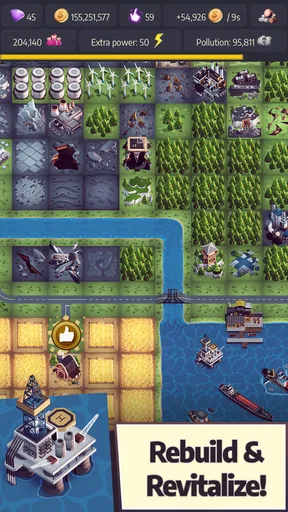
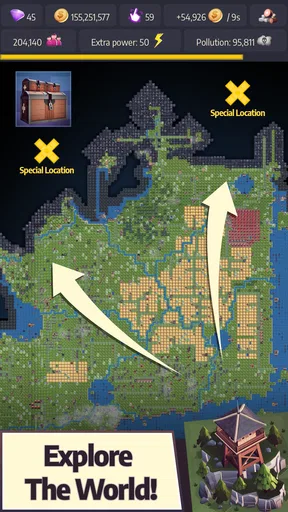
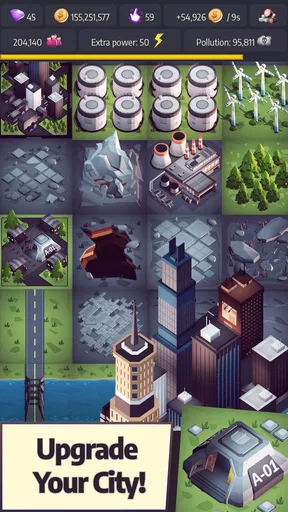
When I first launched Post Apo Tycoon - Idle Builder, I was immediately taken by its gritty yet vibrant graphics. The game is set in a world where civilization as we know it has crumbled. You start with a humble little shelter, and your mission is to expand it into a bustling haven for survivors. The visuals do a fantastic job of immersing you in a world where resources are scarce, and every decision counts.
The Gameplay Experience
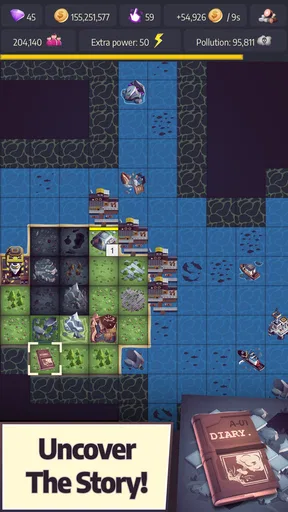
One of the most enjoyable aspects of the game is its idle mechanics. I love games that respect my time, and this one does just that. You can set up your production lines, send out scavenging parties, and then let the game do the work while you’re away. Every time I returned, there was something new waiting for me, be it more resources or new challenges.
Managing resources is key, and you’ll find yourself constantly strategizing on how best to allocate your survivors. Should you send more people to gather food or focus on building new facilities? These are the decisions that keep you engaged and coming back for more.
Building and Upgrading
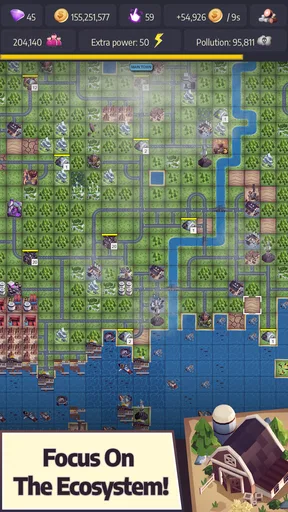
The building aspect of Post Apo Tycoon - Idle Builder is incredibly satisfying. Each new building you construct opens up new possibilities, from solar panels to water purifiers. As your community grows, so does your need for more complex structures, and the game gives you plenty of options to customize your settlement.
The upgrade system is straightforward yet rewarding. By investing in your buildings and infrastructure, you can improve efficiency and unlock new technologies. I found myself constantly checking my resource levels to see which upgrade I could afford next.
Challenges and Events
The game also throws various challenges your way. From raider attacks to natural disasters, these events add a layer of unpredictability to the game. I particularly enjoyed the seasonal events that offer unique rewards and themes, keeping the gameplay fresh and exciting.
One time, I faced a particularly nasty sandstorm that threatened to wipe out my entire food supply. It was a tense moment, but managing to survive it felt incredibly rewarding.
Community and Social Features
Another cool feature is the ability to connect with other players. You can form alliances, trade resources, and compete in global events. It’s a great way to test your skills against others and see how your settlement stacks up. I found the community to be welcoming and full of tips for newcomers.
Final Thoughts
Overall, Post Apo Tycoon - Idle Builder offers a unique blend of strategy and idle gameplay that is both engaging and relaxing. It’s perfect for those who love to plan and optimize but don’t always have the time to be glued to their screens. The game does a great job of balancing challenge with accessibility, making it a must-try for fans of the genre.
Whether you’re a seasoned tycoon or just looking for a fun way to pass the time, this game provides a post-apocalyptic playground that’s hard to resist. So, are you ready to build your empire in a world where only the strongest survive?
Pros
- Engaging post-apocalyptic setting.
- Addictive idle gameplay mechanics.
- Frequent updates with new content.
- User-friendly interface and controls.
- Offline play available for convenience.
Cons
- In-app purchases can be pricey.
- Occasional ads disrupt gameplay.
- Requires frequent data updates.
- Some levels feel repetitive.
- Graphics could be more detailed.
FAQs for Post Apo Tycoon - Idle Builder
What is the main objective of Post Apo Tycoon - Idle Builder?
Post Apo Tycoon - Idle Builder is a simulation game where players manage and expand a settlement in a post-apocalyptic world. The main objective is to gather resources, build structures, and develop a thriving community amidst the ruins. Strategy is key, as players must balance resource management and expansion to ensure the survival and growth of their settlement.
Is an internet connection required to play Post Apo Tycoon - Idle Builder?
While Post Apo Tycoon - Idle Builder can be played offline, some features may require an internet connection. These can include accessing online leaderboards, receiving updates, or participating in special events. However, the core gameplay experience can be enjoyed without needing to be connected to the internet, making it accessible anytime, anywhere.
Are there any in-app purchases in Post Apo Tycoon - Idle Builder?
Yes, Post Apo Tycoon - Idle Builder offers in-app purchases. Players can buy various items or currency to enhance their gaming experience. While these purchases can speed up progression or unlock special features, they are entirely optional. Players can enjoy and progress in the game without spending real money, although it may require more time and strategy.
How does the progression system work in Post Apo Tycoon - Idle Builder?
In Post Apo Tycoon - Idle Builder, progression is achieved by building and upgrading structures, completing quests, and expanding your settlement. As players advance, they unlock new buildings, technologies, and resources. The game employs an idle mechanic, allowing your settlement to generate resources even when you're not actively playing, promoting a continuous sense of growth.
What age group is Post Apo Tycoon - Idle Builder suitable for?
Post Apo Tycoon - Idle Builder is designed for players aged 12 and up, due to its strategy-based gameplay and post-apocalyptic theme. While it contains no explicit content, the game's complexity and resource management mechanics are best suited for a more mature audience who can appreciate and enjoy the strategic elements involved.


